
Plantar Warts
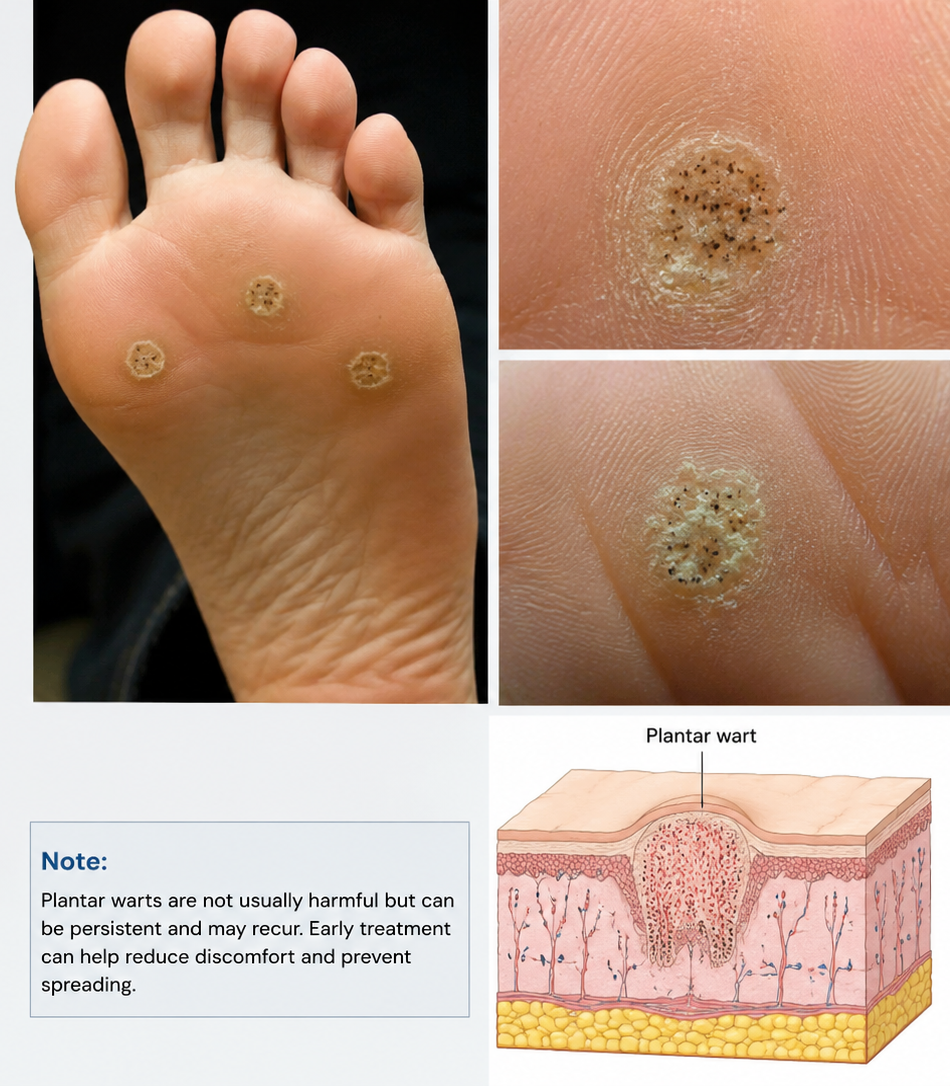
Plantar warts (verruca plantaris) are small, rough, often painful growths on the soles of the feet caused by the Human Papillomavirus (HPV). They occur when the virus enters through tiny cuts, often caught in warm, moist areas like locker rooms. While they often go away on their own over months or years, common treatments include over-the-counter salicylic acid, freezing kits, and keeping the feet clean and dry.
Symptoms of a Foot Wart
Location: Mostly on the heels or balls of the feet.
Appearance: Small, rough growths with hard, thick skin (callus) over them.
"Seeds": Small black specks (clotted blood vessels) often appear in the center.
Pain: Tender when walking or standing, especially when squeezed.
Causes and Transmission
Virus: Caused by HPV, which thrives in warm, moist environments like swimming pools, locker rooms, and communal showers.
Entry: The virus enters through tiny cuts, abrasions, or weak spots on the bottom of the foot.
Contagious: They can spread from person to person through contact or from one part of your foot to another.
Treatments and Self-Care
Salicylic Acid: Over-the-counter liquids or patches that peel the wart away over weeks.
Freezing (Cryotherapy): Kits like Dr. Scholl's or Compound W can freeze the wart.
Duct Tape Method: Covering the wart with duct tape, replacing it every few days, and using a pumice stone to remove dead tissue.
Keep Feet Dry: Change socks daily and ensure feet are dry to prevent the spread.
When to See a Doctor
If the wart is painful, spreading, or persists despite home treatment.
If you have diabetes, a weak immune system, or poor circulation in your feet.
If you are unsure if it is a wart (to distinguish from calluses or lesions). [1, 2, 3, 4, 5]
Prevention
Avoid walking barefoot in public areas; wear flip-flops in locker rooms and pool areas.
Keep feet clean and dry.
Avoid touching or scratching existing warts to stop them from spreading.
Contact
Reach out for expert foot and ankle care
Call Us
248-471-3312
© 2026. All rights reserved.