
Plantar Fasciitis
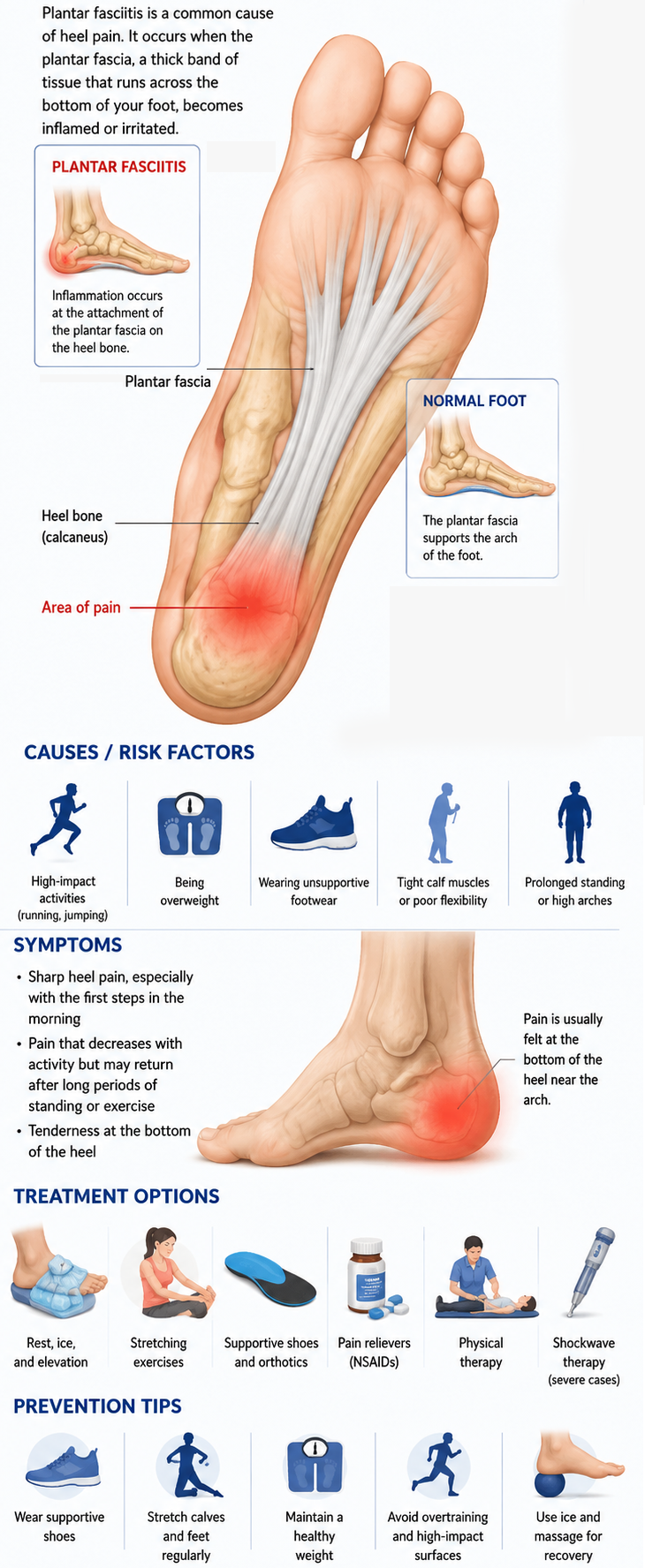
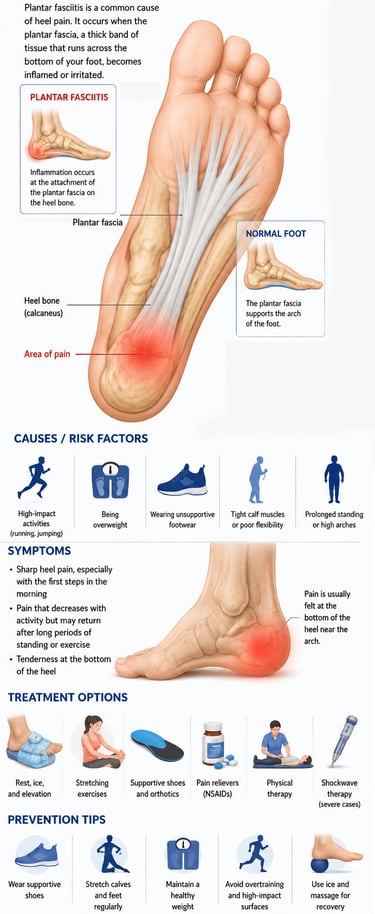
Plantar fasciitis is the most common cause of heel pain, occurring when the thick band of tissue (the plantar fascia) that connects your heel bone to your toes becomes inflamed or overstretched. It often feels like a stabbing or aching sensation in the bottom of your foot, especially near the heel.
Key Symptoms
Morning Pain: Intense "first-step" pain immediately after getting out of bed.
Post-Rest Stiffness: Sharp pain when standing up after sitting for a long period.
Activity Triggers: Pain typically worsens after exercise rather than during it, or after long hours of standing.
Radiation: While centered on the heel, the pain can sometimes radiate toward the toes or arch.
Common Causes & Risk Factors
The condition is often a result of repetitive stress or "overuse" that leads to small tears in the tissue.
Physical Strain: High-impact activities like running, jumping, or dancing.
Foot Mechanics: Having flat feet, high arches, or an unusual walking pattern.
Occupational Stress: Jobs that require long hours of standing or walking on hard surfaces.
Other Factors: Sudden weight gain, wearing unsupportive shoes, and age (it most commonly affects those between 40 and 60).
Relief and Treatment
Most people recover within several months using conservative, at-home methods:
Stretching: Focus on the calves, Achilles tendon, and the plantar fascia itself.
Rest & Ice: Avoiding high-impact activity and rolling your foot over a frozen water bottle can reduce inflammation.
Supportive Gear: Using arch supports (orthotics), night splints to keep the foot stretched, or better-fitting shoes.
Medication: Over-the-counter anti-inflammatories like ibuprofen may help manage pain.
If pain persists for more than a few weeks despite home care, a podiatrist or physical therapist can provide more advanced options like specialized exercises, injections, or, in rare cases, surgery.
Contact
Reach out for expert foot and ankle care
Call Us
248-471-3312
© 2026. All rights reserved.