
Ingrown Toenails
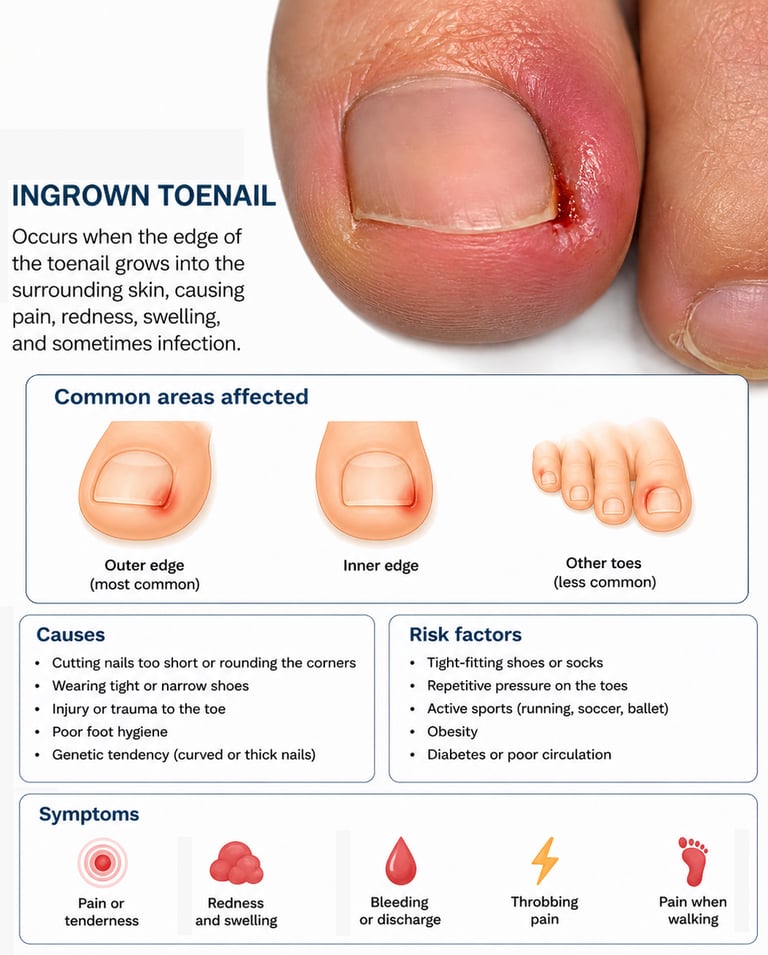
An ingrown toenail occurs when the corner or side of a toenail grows into the soft flesh of the toe. While it most commonly affects the big toe, it can happen to any toe, leading to pain, redness, swelling, and sometimes infection.
Common Causes
Improper Trimming: Cutting nails too short or rounding the edges instead of cutting straight across.
Tight Footwear: Wearing shoes that crowd the toes or put too much pressure on the nail.
Injuries: Stubbing your toe or repetitive trauma from activities like soccer.
Genetics: Naturally curved or unusually wide nails can be hereditary.
Home Care Remedies
If the condition is mild and not infected, you may find relief with these steps :
Warm Soaks: Soak your foot in warm, soapy water or an Epsom salt solution for 10–20 minutes several times a day.
Cotton or Floss: After soaking, gently place a small piece of clean, wet cotton or waxed dental floss under the ingrown edge to help the nail grow above the skin.
Antibiotic Ointment: Apply a petroleum-based product or antibiotic cream to the tender area and bandage it.
Sensible Shoes: Wear open-toed shoes or sandals until the toe heals to avoid pressure.
When to See a Doctor
You should seek professional help from a podiatrist or healthcare provider if:
Signs of Infection: You notice pus, drainage, a foul odor, or redness that is spreading.
Severe Pain: The pain makes it difficult to walk or wear shoes.
Pre-existing Conditions: You have diabetes, poor circulation, or nerve damage in your feet. In these cases, you should never attempt self-treatment.
Medical treatments may include a partial or full nail avulsion, where a doctor numbs the toe and removes the ingrown portion. For recurring issues, they may perform a matrixectomy to permanently prevent that part of the nail from growing
Contact
Reach out for expert foot and ankle care
Call Us
248-471-3312
© 2026. All rights reserved.