Heel Pain & Spurs
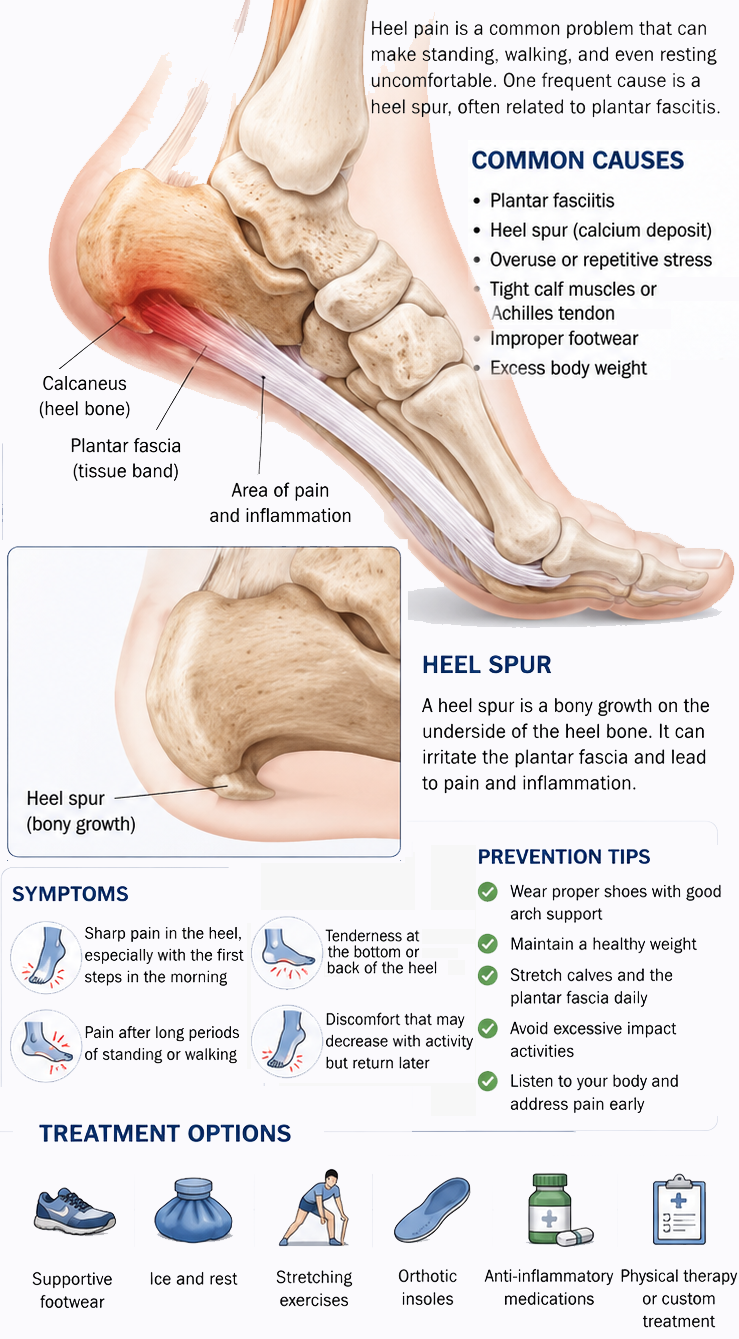
Heel spur pain is often described as a sharp, stabbing sensation that feels like a pin or knife sticking into the bottom of your foot. This pain typically occurs during your first steps out of bed in the morning or after sitting for a long period. Surprisingly, the bony spur itself is rarely the source of pain; the discomfort is usually caused by inflammation in the surrounding soft tissues, most commonly associated with plantar fasciitis.
Common Symptoms
While many heel spurs cause no symptoms at all, those that do often follow a specific pattern:
Morning Pain: Intense sharp pain during the first few steps of the day that may turn into a dull ache as you move.
Activity Triggers: Pain that returns after prolonged standing or high-impact activities like running or jumping.
Localized Tenderness: A specific spot on the bottom of your heel that is sensitive to touch or pressure.
Inflammation: Possible mild swelling, warmth, or a dull ache that persists throughout the day.
Immediate Home Relief
Most people can manage symptoms effectively with conservative, non-surgical treatments:
Stretching: Gently stretch your calves and the bottom of your foot before getting out of bed.
Supportive Footwear: Avoid walking barefoot on hard floors and use shoes with good arch support and cushioning.
Icing: Apply an ice pack for 10–15 minutes after activity to reduce inflammation.
Orthotics: Use over-the-counter or custom shoe inserts like those from Dr. Scholl's to redistribute pressure.
Over-the-Counter Meds: Anti-inflammatory medications like ibuprofen can help manage both pain and swelling.
Professional Treatment Options
If home care isn't enough, healthcare providers such as those at the Cleveland Clinic or Stanford Health Care may recommend:
Physical Therapy: Custom exercise programs to strengthen foot muscles and improve flexibility.
Injections: Corticosteroid shots to quickly reduce severe inflammation.
Shockwave Therapy: Using sound waves to stimulate healing in the soft tissue.
Surgery: Typically a last resort if pain persists after 6–12 months of other treatments.
Contact
Reach out for expert foot and ankle care
Call Us
248-471-3312
© 2026. All rights reserved.