
Bunions
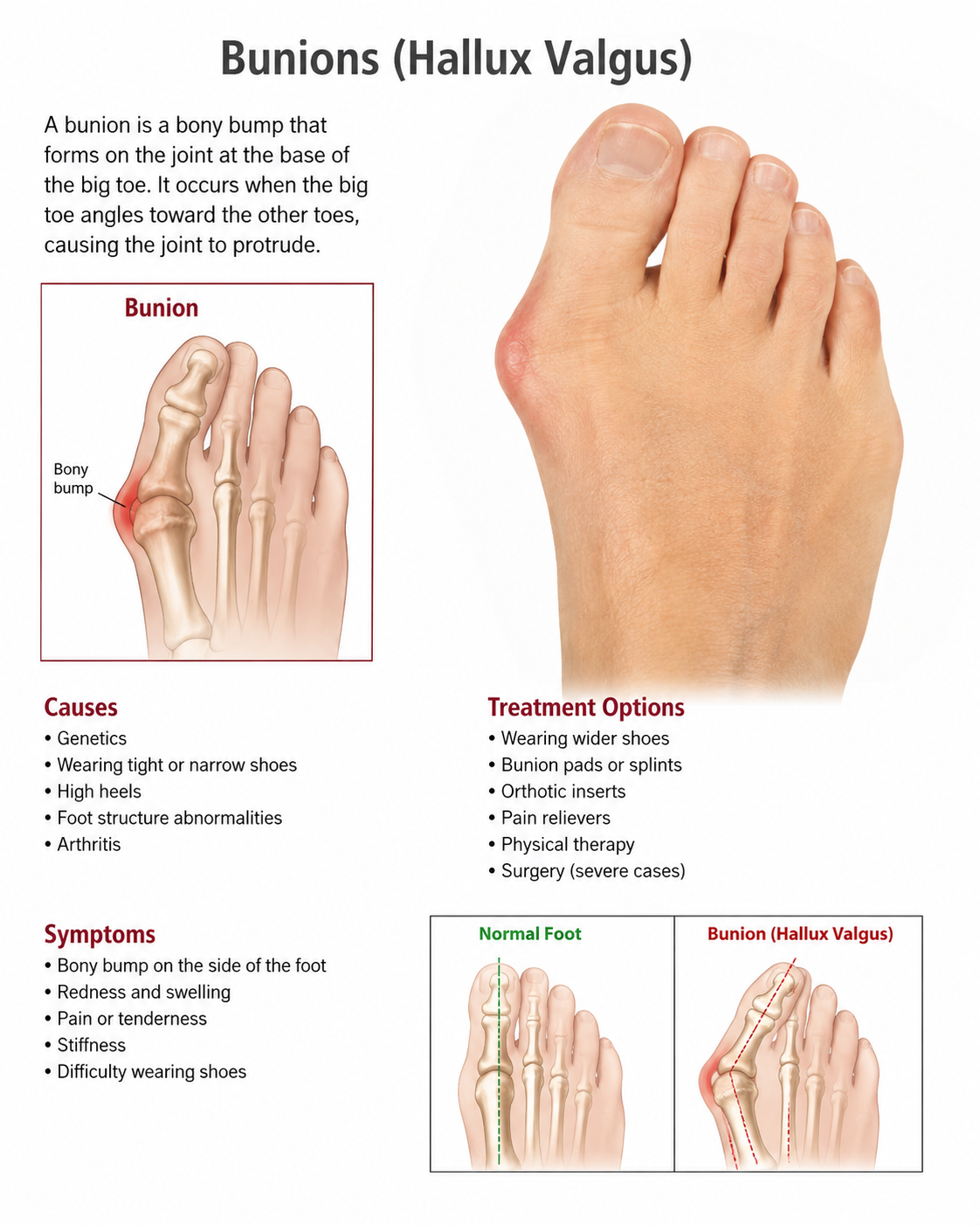
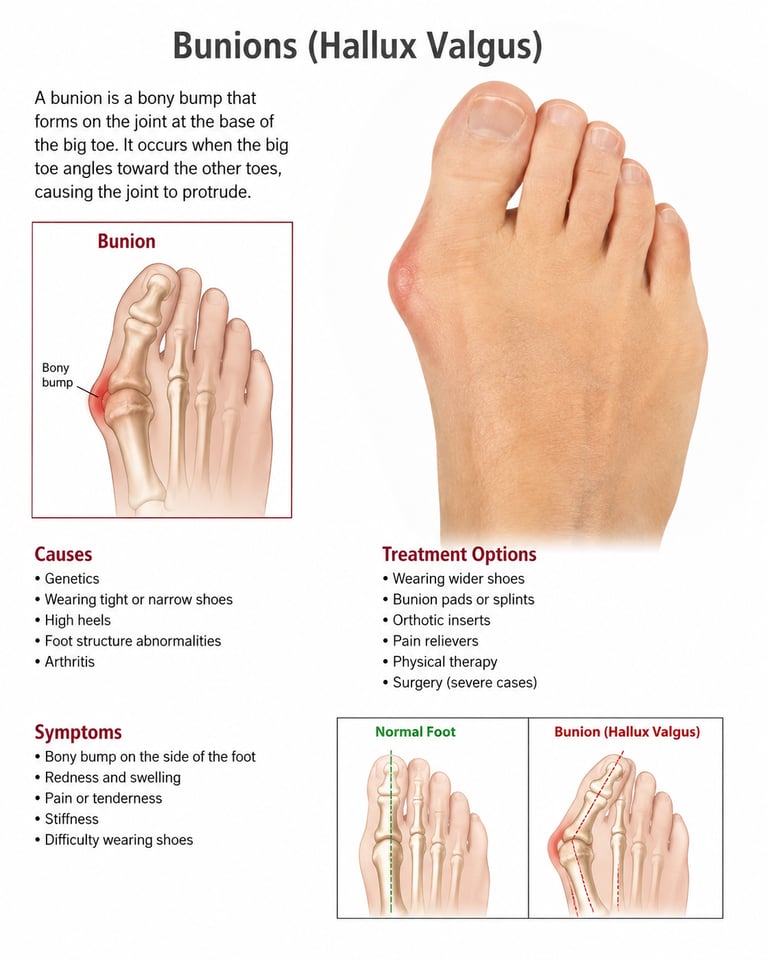
A bunion (medically known as hallux valgus) is a bony bump that forms at the base of the big toe joint. It develops when the bones in the front part of the foot move out of place, causing the big toe to lean toward the smaller toes and forcing the joint at the base to stick out.
Symptoms of Bunions
Common signs of a bunion include:
A visible bump on the inside edge of the foot at the base of the big toe.
Pain and soreness, which may be persistent or occur intermittently.
Swelling, redness, or inflammation over the affected joint.
Corns or calluses, often developing where the first and second toes rub together.
Stiffness or restricted movement of the big toe, making it difficult to walk.
Common Causes
While the exact cause isn't always clear, several factors contribute to bunion development:
Genetics: An inherited foot structure (like flat feet or low arches) can make you more prone to bunions.
Footwear: Tight, narrow, or high-heeled shoes can force toes into an unnatural position, worsening the deformity.
Medical Conditions: Inflammatory conditions like Rheumatoid Arthritis are strongly linked to bunion formation.
Management and Treatment
Treatments typically focus on relieving pain and preventing the condition from getting worse.
Footwear Changes: Wearing shoes with a wide toe box and low heels is one of the most effective ways to manage symptoms.
Non-Surgical Aids: Using bunion pads, Toe Spacers, or custom orthotic inserts can help redistribute pressure.
Pain Relief: Applying ice packs and taking over-the-counter anti-inflammatory medications (like ibuprofen) can reduce swelling and pain.
Surgery: If conservative treatments fail and pain interferes with daily life, a healthcare provider may recommend a Bunionectomy to realign the bone and joint.
It is recommended to see a Podiatrist if you have persistent pain, a visible deformity, or difficulty finding shoes that fit properly.
Contact
Reach out for expert foot and ankle care
Call Us
248-471-3312
© 2026. All rights reserved.