Achilles Tendinitis
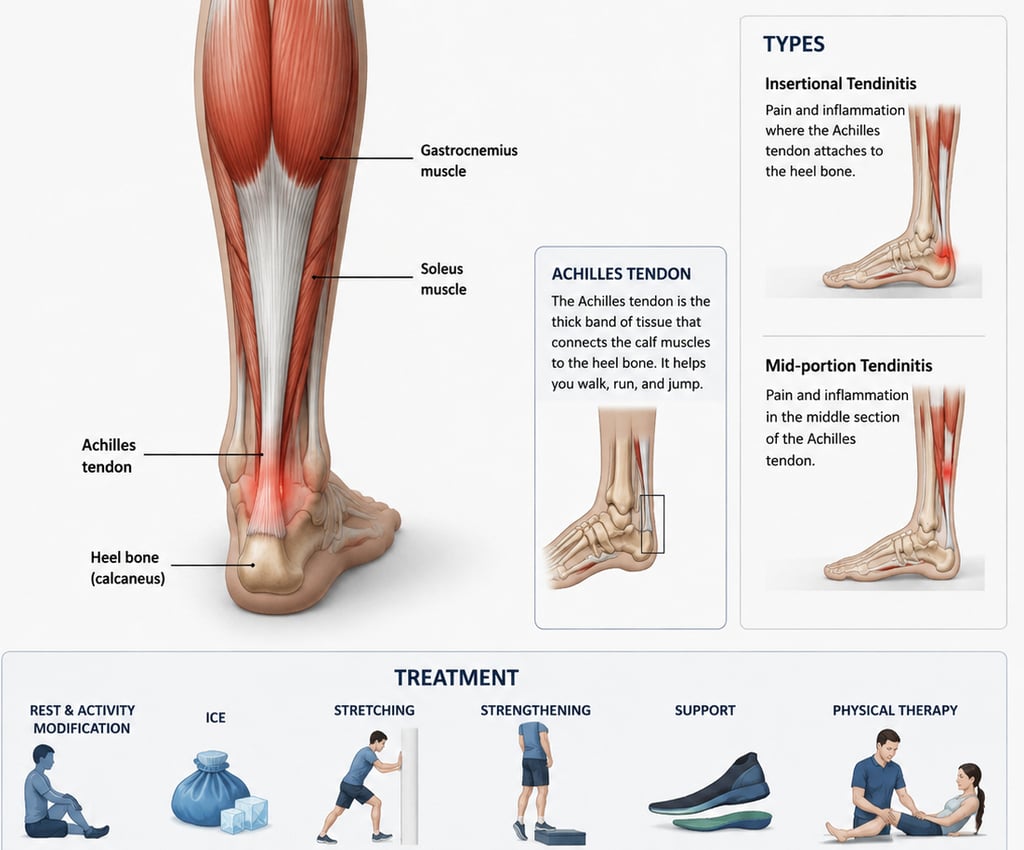
Achilles tendinitis is an injury caused by overuse of the Achilles tendon, the thick band of tissue that connects your calf muscles to your heel bone. It is most common in runners who suddenly increase their training intensity and middle-aged "weekend warriors" who engage in occasional high-impact sports like basketball or tennis.
Common Symptoms
The most recognizable sign is an ache or sharp pain at the back of the leg or above the heel. [1, 2]
Morning Stiffness: Severe pain and stiffness in the heel upon waking that usually improves with mild activity.
Post-Exercise Pain: Intense pain that develops the day after exercising or after climbing stairs and sprinting.
Physical Changes: Noticeable swelling, thickening of the tendon, or even the formation of hard knots (bone spurs).
Types of Tendinitis
Non-insertional Achilles Tendinitis: Affects the middle part of the tendon, where fibers begin to break down and thicken. It typically occurs in younger, active individuals.
Insertional Achilles Tendinitis: Involves the lower portion of the tendon where it attaches to the heel bone. This can affect anyone, regardless of activity level, and often leads to the development of bone spurs.
Achilles tendinitis is an injury caused by overuse of the Achilles tendon, the thick band of tissue that connects your calf muscles to your heel bone. It is most common in runners who suddenly increase their training intensity and middle-aged "weekend warriors" who engage in occasional high-impact sports like basketball or tennis.
Common Symptoms
The most recognizable sign is an ache or sharp pain at the back of the leg or above the heel.
Morning Stiffness: Severe pain and stiffness in the heel upon waking that usually improves with mild activity.
Post-Exercise Pain: Intense pain that develops the day after exercising or after climbing stairs and sprinting.
Physical Changes: Noticeable swelling, thickening of the tendon, or even the formation of hard knots (bone spurs).
Types of Tendinitis
Non-insertional Achilles Tendinitis: Affects the middle part of the tendon, where fibers begin to break down and thicken. It typically occurs in younger, active individuals.
Insertional Achilles Tendinitis: Involves the lower portion of the tendon where it attaches to the heel bone. This can affect anyone, regardless of activity level, and often leads to the development of bone spurs.
Recovery and Treatment
Most cases can be managed with home care, but recovery is often slow because the tendon has a poor blood supply.
Immediate Care (R.I.C.E.):
Rest: Avoid high-impact activities. Switch to low-impact exercises like swimming.
Ice: Apply ice for 15 minutes after exercise to reduce inflammation.
Compression & Elevation: Use elastic bandages and keep the foot raised above the heart to minimize swelling.
Rehabilitation: Physical therapists often recommend eccentric training, such as slowly lowering your heel off the edge of a step, to strengthen the tendon.
Support: Wearing supportive shoes or using orthotic inserts can help take pressure off the tendon.
Healing Timeline: Mild cases may heal in 2–4 weeks, while chronic conditions can take 3–6 months or longer to resolve.
Most cases can be managed with home care, but recovery is often slow because the tendon has a poor blood supply.
Immediate Care (R.I.C.E.):
Rest: Avoid high-impact activities. Switch to low-impact exercises like swimming.
Ice: Apply ice for 15 minutes after exercise to reduce inflammation.
Compression & Elevation: Use elastic bandages and keep the foot raised above the heart to minimize swelling.
Rehabilitation: Physical therapists often recommend eccentric training, such as slowly lowering your heel off the edge of a step, to strengthen the tendon.
Support: Wearing supportive shoes or using orthotic inserts can help take pressure off the tendon.
Healing Timeline: Mild cases may heal in 2–4 weeks, while chronic conditions can take 3–6 months or longer to resolve.
Contact
Reach out for expert foot and ankle care
Call Us
248-471-3312
© 2026. All rights reserved.